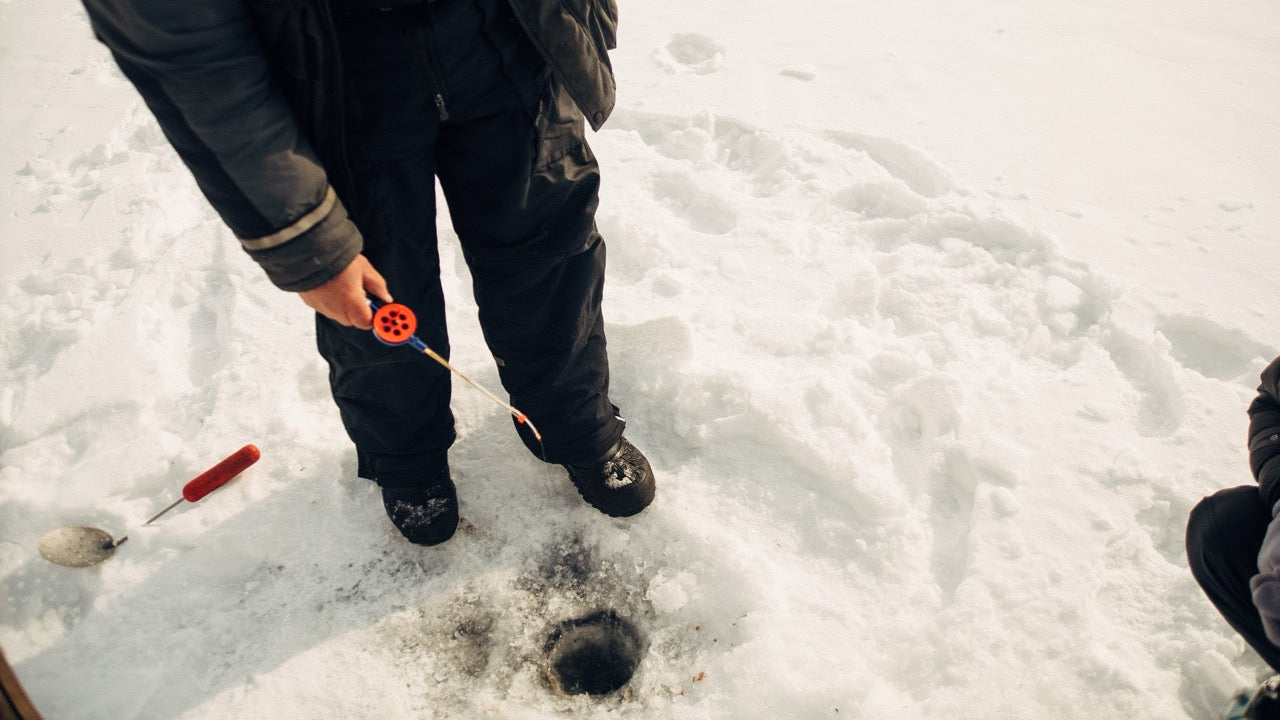
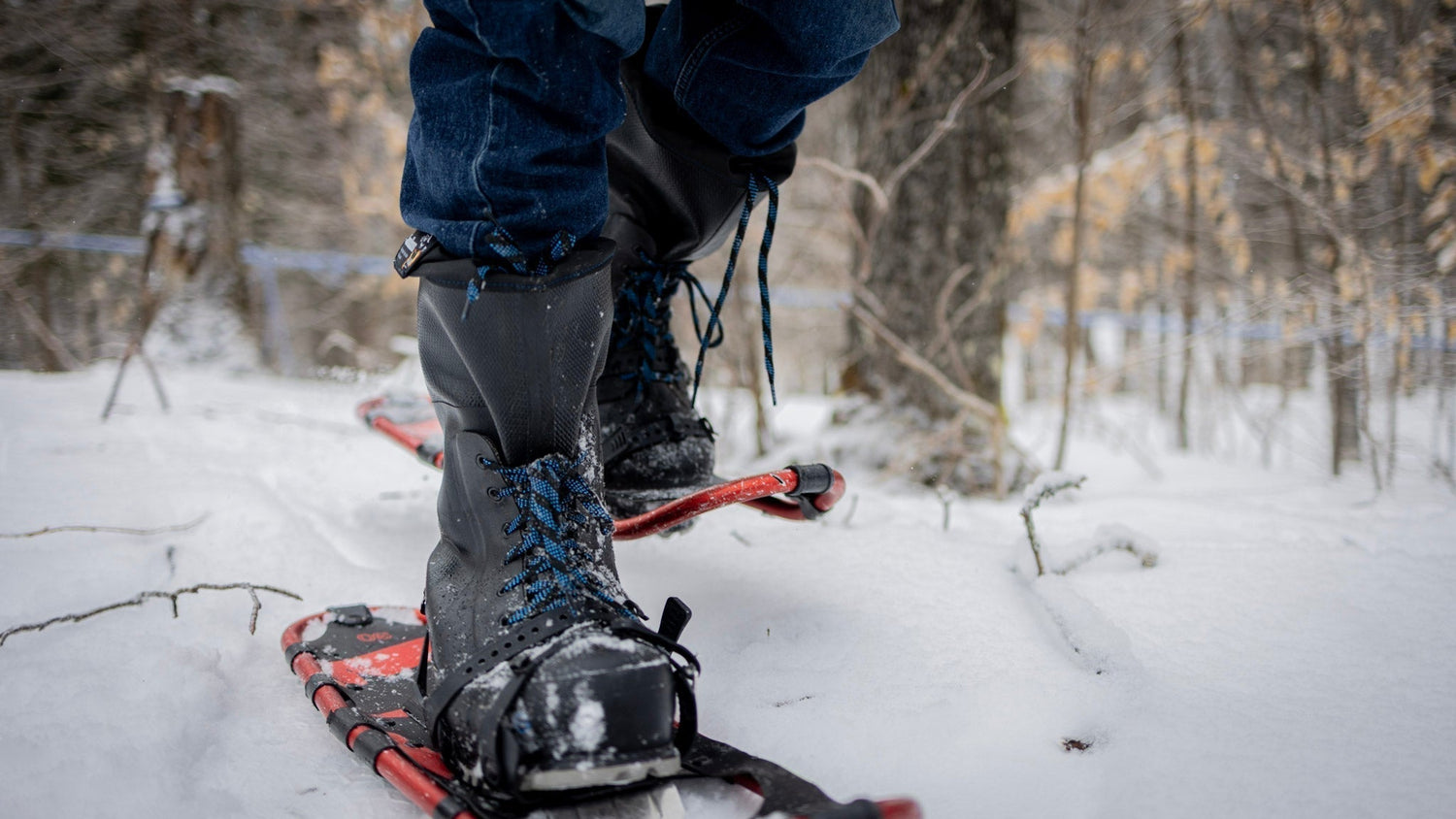
You hiked to the ice fishing spot feeling warm. Twenty minutes after sitting down, your feet are cold. Same boots, same socks, same temperature outside. But the conditions inside the boot changed the moment you stopped moving.
This is one of the most misunderstood aspects of cold-weather footwear. A boot that performs well during active use can feel inadequate during stationary use—not because of a design flaw, but because standing still and moving place fundamentally different demands on the boot system.
Understanding what changes—and why—helps you choose the right boot and manage warmth more effectively in mixed-activity days.
What Movement Does for Your Feet
When you're walking, hauling gear, or doing physical work, your body generates significantly more heat than at rest. That heat travels to your extremities through blood flow. Your feet receive a steady supply of warm blood, and the insulation around them has plenty of heat to trap.
Movement also creates a subtle pumping effect inside the boot. As your foot flexes, air circulates slightly between insulation layers, and moisture migrates through the system rather than pooling in one spot. The boot is working under favorable conditions: high heat input, moderate moisture distribution.
This is why temperature ratings on boots can feel accurate during a hike but optimistic during a sit. The rating reflects insulation capacity—but insulation only retains heat that's already there. It doesn't generate any.

What Happens When You Stop
The moment you stop moving, several things change at once:
Heat output drops. Your metabolic rate decreases when physical activity stops. Less heat is generated, and less is delivered to your feet. The insulation now has less warmth to work with.
Blood flow to extremities decreases. Your body prioritizes keeping your core warm. As overall heat production falls, blood is redirected away from your hands and feet toward your organs. This is a normal physiological response—but it means your feet are now receiving less warm blood at the exact moment they need it most.
Accumulated moisture starts working against you. During activity, your feet were sweating—sometimes significantly. That moisture is now sitting in your socks, your insole, and the inner layers of your insulation. With less body heat to counteract it, that moisture accelerates cooling through conduction and evaporation. (We cover this mechanism in detail in Why Damp Feet Get Cold—Even in Insulated Boots.)
Ground contact becomes a factor. When you're walking, each foot is only on the ground for a fraction of each stride. When you're standing still—or sitting with both feet flat on ice or frozen ground—heat conducts continuously through the outsole into the surface below. On ice or packed snow, this is a constant, steady draw of warmth away from your feet.

The Mixed-Activity Problem
Most cold-weather days aren't all movement or all sitting. You hike to a spot. You stand for hours. You walk back. You haul equipment, then wait. Hunting, ice fishing, winter work, spectating outdoor events—they all involve transitions between active and stationary phases.
This creates a specific challenge: the insulation level that's appropriate for walking may cause excessive sweating, and the moisture generated during the active phase then makes the stationary phase colder than it would have been otherwise.
Heavily insulated boots during a hike can actually make your feet colder later in the day. The insulation traps sweat during the active period, and that moisture degrades thermal performance during the stationary period—exactly when you need insulation most.
This is why experienced cold-weather users often say the trick isn't maximum insulation. It's managing the transition between moving and stopping.
What Helps During Stationary Use

Insulation that still works when damp. Felt and wool-based insulation materials retain more of their thermal properties when exposed to moisture than many synthetic fills. Since some moisture accumulation is inevitable during activity, using materials that degrade less when damp provides a margin during the stationary phase.
Adjustable insulation. Being able to add or swap insoles between activity phases lets you tune the boot. Thinner insoles during active movement reduce sweating; thicker or felt-based insoles during stationary use increase warmth. This simple adjustment addresses the core problem: different phases need different thermal loads.
Outsole design that reduces ground conduction. A thicker, more substantial outsole creates more distance between your foot and the frozen surface. During standing or sitting, the outsole is your primary barrier against conductive heat loss. Thin, flexible outsoles that feel comfortable walking can cost you warmth when stationary.
A shell that manages interior moisture. Boots that move humidity away from the foot—rather than trapping it against the insulation—help ensure that moisture from the active phase doesn't compound the cold during the stationary phase.
Why Most Boots Optimize for One or the Other
Lightweight winter hiking boots are designed for movement. They prioritize flexibility, breathability, and weight. They work well on the trail. They're not built for three hours on a frozen lake.
Heavy-duty pac boots and insulated rubber boots are designed for stationary use. They pile on insulation and prioritize sealing over flexibility. They keep feet warm when standing, but can cause heavy sweating during a hike in—and that sweat undermines the insulation they're counting on.
Few boots are designed to handle both phases of a mixed-activity day. Most force a tradeoff: optimize for the hike and suffer at the sit, or optimize for the sit and overheat on the walk.
How ThermoBoss™ Handles the Transition
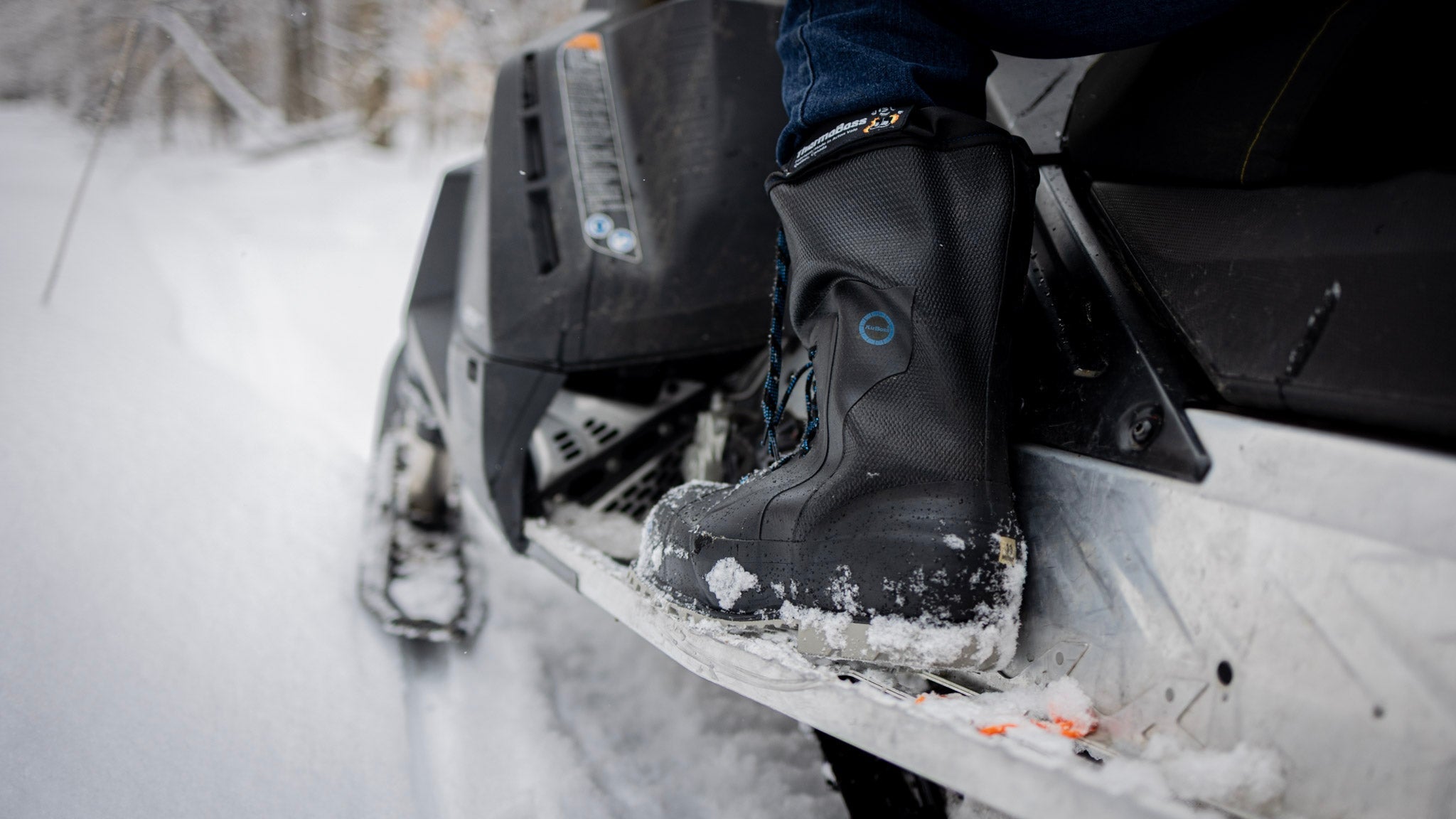
The AirBoss ThermoBoss™ Extreme Cold Weather Boot was designed for exactly this kind of use—long-duration days that include both active and stationary phases. ThermoBoss™ is built on the same cold-weather technology AirBoss developed over decades of producing extreme cold weather footwear for the U.S. military—including the Vapor Barrier Boot (Bunny Boot). That military heritage informs every design decision in the system, now applied to commercial use.
The adjustable insole system is central to this. ThermoBoss™ includes two removable insoles: a felt insole for maximum warmth during stationary use, and a synthetic mesh insole for lighter activity phases where less insulation and more airflow helps manage moisture. You can swap between them as conditions change, or use both together in extreme cold.
The double felt insulation system retains thermal performance even as moisture accumulates during active phases—felt releases moisture more readily than many synthetic fills and degrades less when partially damp. The moisture-management shell works to move humidity away from the foot during both active and stationary use, rather than trapping it inside the boot.
For the recommended liner, insole, and drying routine between uses, see the ThermoBoss™ Care and Drying Guide.
And the one-piece molded outsole provides a substantial barrier between your foot and frozen ground—relevant during any period of standing or sitting. For more on outsole performance, see Traction on Ice and Snow: What Actually Matters.
For guidance on adjusting insoles based on activity, see How Insoles Affect Warmth and Fit in Cold-Weather Boots.