
A cold-weather boot is an investment. How you maintain it between uses determines how well it performs, and for how long.
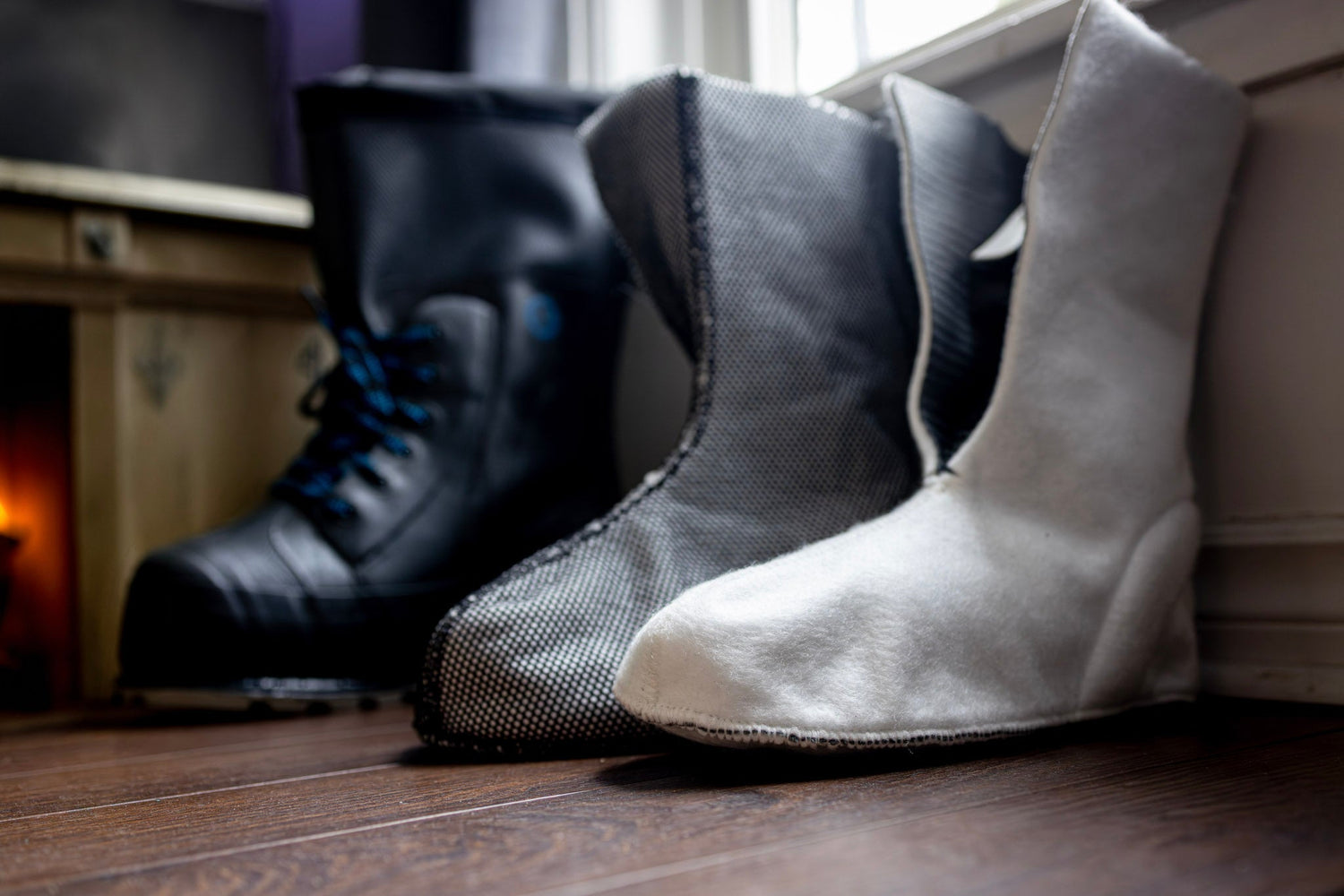
The ThermoBoss™ Extreme Cold Weather Boot is built around a removable system: removable liner, removable footbed, and two removable insoles. That modularity isn't just a feature for adjusting warmth in the field. It's what makes proper drying and maintenance possible. A boot you can fully disassemble is a boot you can fully dry, clean, and reset between uses.
This guide covers the complete ThermoBoss™ care routine. Drying after use, cleaning the shell, storing correctly, and knowing when to replace components.
Why the Drying Step Matters
Every cold-weather boot accumulates moisture during a day of use. Your feet produce sweat even in freezing conditions, and that moisture migrates into the liner, footbed, and insoles over the course of a day. When insulation gets wet, it loses its ability to trap still air and trapped air is how insulation keeps your feet warm.
A boot that goes back on the next morning without adequate drying starts the day at reduced thermal capacity. On day three or four of consecutive use without drying, performance degradation becomes significant. (We cover the mechanics in detail in Why Drying Time Matters for Multi-Day Boot Use.)
The ThermoBoss™ system addresses this directly: every insulating component is removable, so every insulating component can fully dry overnight.
The ThermoBoss™ Drying Routine
After each day of use in cold or wet conditions, follow this sequence:
Step 1 — Remove the Liner
Unlace the boot completely and pull the removable liner out. The liner should be left to air-dry in a warm, dry location—not placed directly on a heat source. Direct heat (radiators, campfire proximity, forced-air vents) can damage the liner material and degrade insulation over time.
The ThermoBoss™ liner is designed to reach approximately 85% dry within six hours under normal indoor conditions. This means that even in a hunting camp or work camp without dedicated drying equipment, an overnight rest is generally sufficient for a usable reset.
Step 2 — Remove the Footbed
Pull out the footbed and stand it upright or lay it flat in a ventilated area. The footbed reaches approximately 90% dry in ten hours. Like the liner, it should air-dry rather than sit near direct heat.
Step 3 — Remove and Rotate Insoles
ThermoBoss™ includes two removable insoles: a felt insole for maximum insulation and a synthetic mesh insole for lighter, more breathable coverage in higher-activity conditions. Both should be removed and left to dry separately.
For multi-day trips, alternating insoles between days is one of the most effective ways to maintain consistent thermal performance. While one insole dries, the other goes in the boot. You start each day with a dry insole rather than a partially saturated one. (How Insoles Affect Warmth and Fit covers the full insole system in more detail.)
Step 4 — Air Out the Shell
With liner, footbed, and insoles removed, leave the boot shell open and upright to vent any remaining moisture from the interior. A boot tree or crumpled newspaper can help hold the shape and draw out residual dampness. Avoid compressing or storing the shell while it's still damp inside.
Cleaning the Boot Shell
The outer shell of the ThermoBoss™ boot will accumulate mud, salt, and road grime during regular use. Salt from ice treatment roads is particularly damaging if left on the boot and it can degrade the rubber and stitching over time.
Cleaning process:
- Remove liner, footbed, and insoles before cleaning
- Rinse the outer shell with clean water to remove loose dirt and salt
- Use a soft brush or cloth with mild soap for stubborn grime
- Rinse thoroughly and allow to air-dry fully before reassembly
- Do not submerge the boot or use pressure washers — force-applied water can work past seams
After cleaning and drying, inspect the sole for separation, cracks, or damage at the welt. Address sole separation early — small separations that go unattended become larger ones that compromise the boot's waterproofing and structural integrity.
Conditioning the Rubber
The ThermoBoss™ shell is constructed from rubber — the same high-performance rubber manufacturing that AirBoss has developed over decades of military and industrial applications. Rubber benefits from occasional conditioning to prevent cracking and maintain flexibility, particularly if the boot has been stored or has gone through extended freeze-thaw cycles.
Use a rubber conditioner or silicone-based product. Avoid petroleum-based products, which can degrade rubber over time. Apply conditioner to a clean, dry boot shell and allow it to absorb before use or storage.
Off-Season Storage
If ThermoBoss™ boots are being stored for an extended period (end of winter season through spring and summer), the following preparation steps will protect them until the next use:
- Clean thoroughly before storage, dirt and salt left on the boot accelerate deterioration
- Dry completely. Store only when all components (liner, footbed, insoles, shell) are fully dry
- Store with liner and footbed inside the shell, loosely reassembled. This helps the boot hold its shape during storage
- Avoid compression, don't stack heavy items on top of stored boots
- Store away from UV and heat sources. Prolonged UV exposure and heat degrade rubber and insulating materials; a cool, dry, dark location is ideal
- Leave boots upright rather than on their sides. This prevents the liner from developing permanent creases or compression points

When to Replace Components
The modular design of ThermoBoss™ means you don't have to replace the entire boot when one component wears out.
Insoles
Insoles typically wear out before the rest of the boot. Signs of a worn insole include: loss of loft (the insole no longer springs back when pressed), visible compression or flattening, hardened or stiff material, or a noticeable decrease in warmth compared to previous seasons. Replacing an insole is the most cost-effective maintenance step in cold-weather boot care.
Liner
The liner is the primary insulation layer. Signs of liner degradation include: loss of loft, persistent cold spots that weren't present before, or physical damage (tears, punctures, or delamination of materials). A liner that no longer rebounds to its original thickness after compression has lost insulating capacity.
Footbed
The footbed provides structural support and thermal separation from the ground. Replace when it has compressed unevenly, shows visible wear-through, or no longer provides a cushioned feel underfoot. An uneven footbed can also affect fit and cause pressure points during extended wear.
Shell
The outer shell is the most durable component. Inspect regularly for sole separation, cracking at the welt, or punctures that compromise waterproofing. Minor sole separation addressed early can often be repaired; advanced separation or structural cracking typically requires boot replacement.
The Practical Summary
The ThermoBoss™ care routine is straightforward: remove all components after use, let everything dry fully, clean the shell when needed, and inspect components for wear before each season. The system is built to be maintained, which is part of what makes it effective for multi-day and extended cold-weather use.
The drying times built into the ThermoBoss™ system—85% in six hours for the liner, 90% in ten hours for the footbed—are realistic benchmarks for practical field conditions. An overnight reset is sufficient in most situations. Managing that reset deliberately, by removing and separating components rather than leaving them inside the boot, is what determines whether you start the next day at full performance or half capacity.
For more on how each component contributes to cold-weather performance, see the full guide: