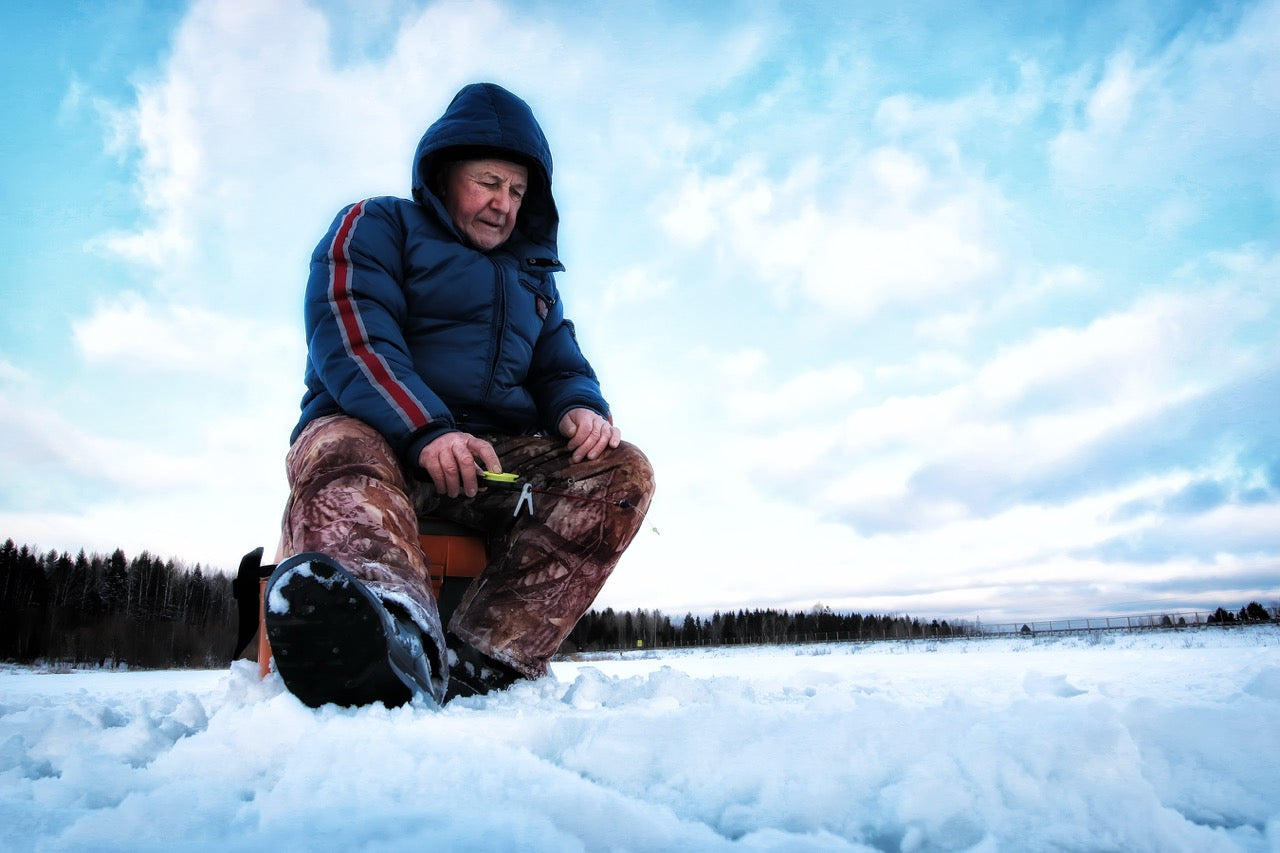

You bought insulated boots. You wore wool socks. You weren't even out that long. And your feet still got cold.
It's one of the most common complaints in cold-weather forums, hunting discussions, and ice fishing groups. And in most cases, the problem isn't that the boot lacks insulation. It's moisture—sometimes from outside the boot, but more often from inside it.
Here's what's actually happening, and what to do about it.
How Insulation Works (and How Moisture Breaks It)

Insulation doesn't generate heat. Your body does that. What insulation does is slow the rate at which heat leaves your foot—by trapping pockets of still air between layers of material. Those tiny air gaps resist heat transfer and keep warmth close to your skin.
Moisture disrupts this in two ways:
Water conducts heat roughly 25 times faster than air. When moisture fills the air spaces in your insulation—whether from sweat, condensation, or external water—those pockets stop insulating and start conducting heat away from your foot. The insulation is still physically present, but it's no longer doing its job.
Evaporation pulls heat directly from your skin. As moisture on or near your foot evaporates, it absorbs energy in the form of heat. This is the same mechanism that makes you feel cold stepping out of a shower. Inside a boot, this evaporative cooling works against you continuously—especially when you stop moving and your body's heat output drops.
This is why two people can wear the same boot in the same conditions and have different experiences. The one whose feet sweat more, or whose socks hold moisture, or whose boot traps humidity inside—that person gets cold first.
Where the Moisture Comes From
External water is the obvious source—slush, overflow on ice, wet snow. A boot with a poor shell or low height lets water in and soaks the insulation directly.
But the more common (and less obvious) source is your own feet.
Your feet produce sweat even in freezing conditions. Walking to your stand, hauling gear onto the ice, or just generating baseline body heat inside a sealed boot creates moisture. Cotton socks make this worse—they absorb sweat and hold it against your skin instead of moving it away.
In a boot with no moisture pathway, that sweat has nowhere to go. It accumulates in your socks, saturates the insulation closest to your foot, and gradually degrades thermal performance from the inside out. By hour two or three, you're standing in a damp boot with compromised insulation—and wondering why your "insulated" boots feel cold.
Why It Gets Worse on Day Two
This problem compounds over multi-day use. After a full day of wear, every boot has accumulated some internal moisture. If you put the boots back on the next morning without drying them out, the insulation starts the day already partially saturated.
Day one might feel fine. Day two feels noticeably colder. By day three, the same boot in the same conditions can feel like it's barely insulated at all.
This is why drying time between uses matters so much for anyone using cold-weather boots across multiple days. Boots with removable liners and insoles that can be pulled out and dried overnight reset their insulation performance. Boots with permanently bonded liners don't offer that option—and performance degrades with each consecutive day of use.
What You Can Do About It

Wear moisture-wicking socks. Merino wool or synthetic blends move sweat away from your skin. Avoid cotton entirely—it absorbs moisture and holds it in place, which is the opposite of what you need.
Don't over-insulate for your activity level. If you're hiking or doing physical work, a heavily insulated boot can cause your feet to sweat excessively. That moisture then makes your feet colder when you stop moving. Match insulation to your expected activity—or choose a boot with adjustable insulation so you can tune it.
Size your boots with room. Tight boots compress insulation (reducing its effectiveness) and restrict blood flow to your foot (reducing heat delivery). A slightly roomy fit with thick socks is almost always warmer than a snug fit.
Dry your boots between uses. Pull removable liners and insoles out overnight. Give them airflow. This single habit does more for multi-day warmth than almost any other change.
For the full step-by-step routine, see the ThermoBoss™ Care and Drying Guide.
Look for boots that manage moisture by design. The best cold-weather boots don't just keep external water out—they also move internal humidity away from the foot, or isolate the insulation from sweat so it maintains thermal performance over hours of wear. This is the difference between a boot that works for the first hour and one that works all day.
How ThermoBoss™ Addresses This

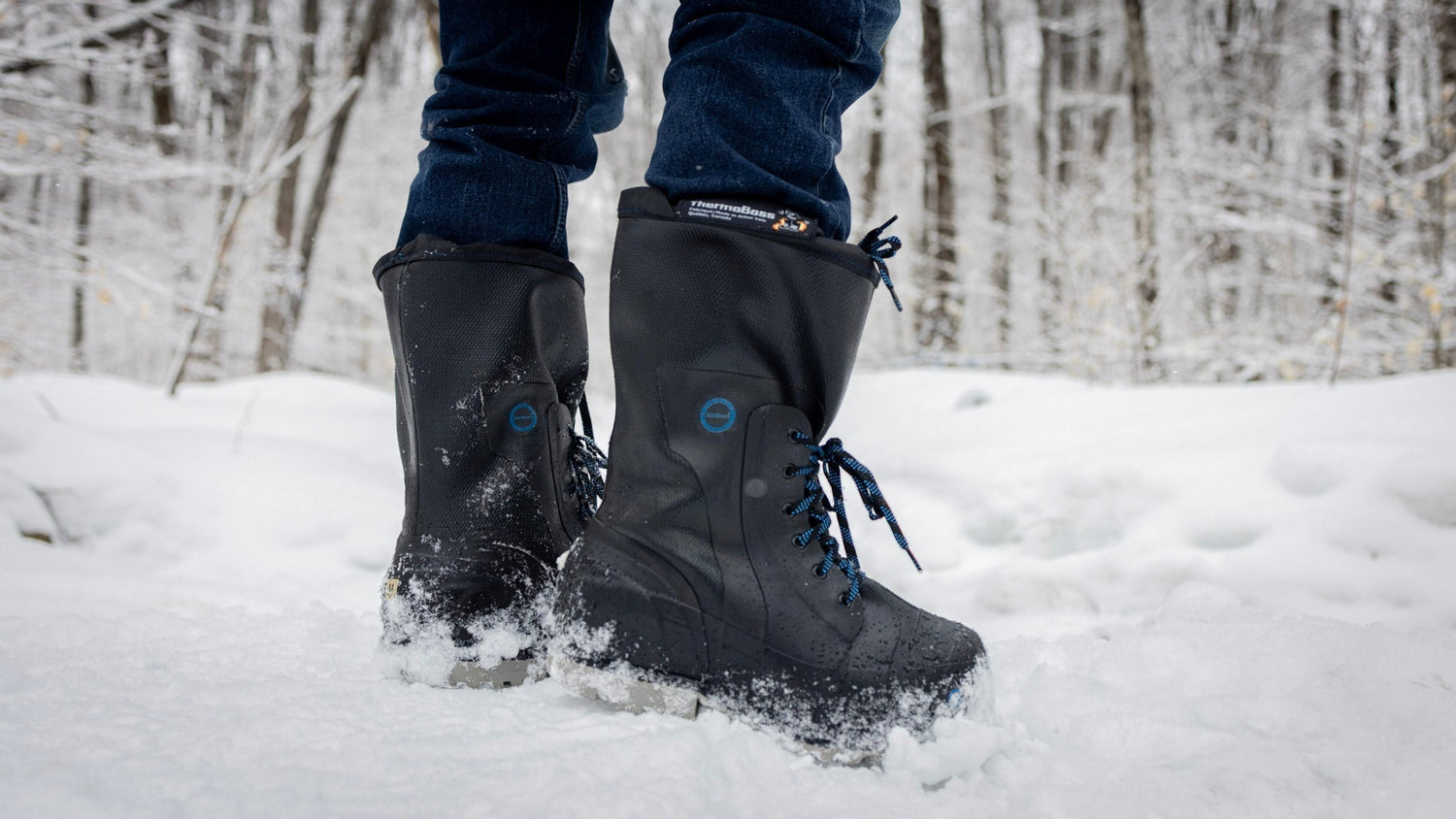
The AirBoss ThermoBoss™ Extreme Cold Weather Boot was designed with moisture management as a core function—not an afterthought.
The water-resistant outer shell is designed to resist external moisture while moving internal humidity toward the shell of the boot, away from the foot. The double felt insulation system can retain warmth while supporting drying between uses. And two removable insoles (felt and synthetic mesh) let you adjust thermal load based on your activity level—reducing the sweat-then-freeze cycle that causes most cold-foot problems in the field.
The liner has been designed to dry approximately 85% in 6 hours. Footbed components are designed to reach approximately 90% dry in 10 hours—so the system resets for the next day.
ThermoBoss™ is built on AirBoss's decades of experience producing extreme cold weather footwear for the U.S. military—including the Vapor Barrier Boot (Bunny Boot). The same technology trusted by the military for decades is now applied to a commercial cold-weather system.
→ View the ThermoBoss™ Extreme Cold Weather Boot
→ Check out: How to Choose Boots for Extreme Cold and Wet Conditions